Smart Hotel Room Automation and Centralized Management Platform Technology Overview
The Smart Hotel Room Automation and Centralized Management Platform focuses on intelligent control, guest interaction, and process integration. A unified IoT platform connects in-room devices with hotel management systems. The room layer handles sensing, actuation, and interaction, while the platform layer manages device access, status synchronization, permission control, and operational analytics. The system supports wireless modular deployment and is suitable for both new construction and renovation projects, improving guest experience and hotel operational efficiency.
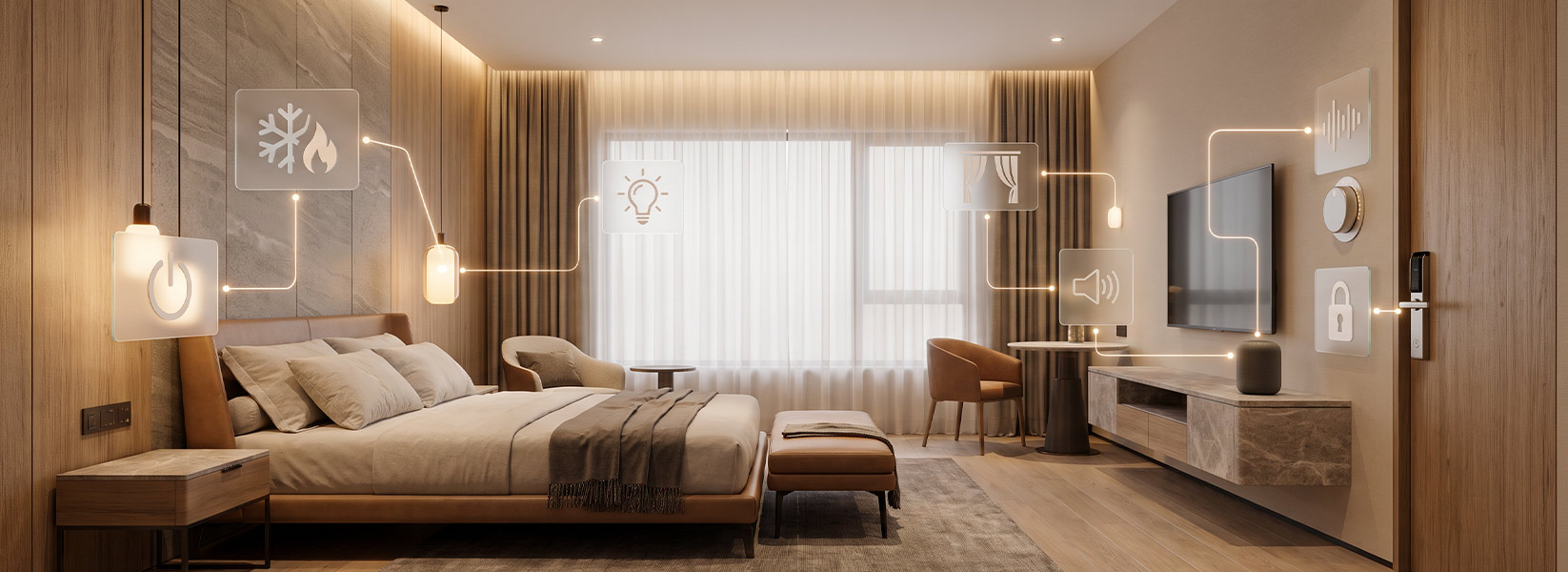
System Architecture and Interaction
The Room Automation System transforms traditional hotel rooms into intelligent spaces capable of sensing, responding and remote control via integrated sensing, actuation and interaction technologies. Built on wireless communications and a modular architecture, the system reduces reliance on conventional wiring and works for both new construction and renovation projects.
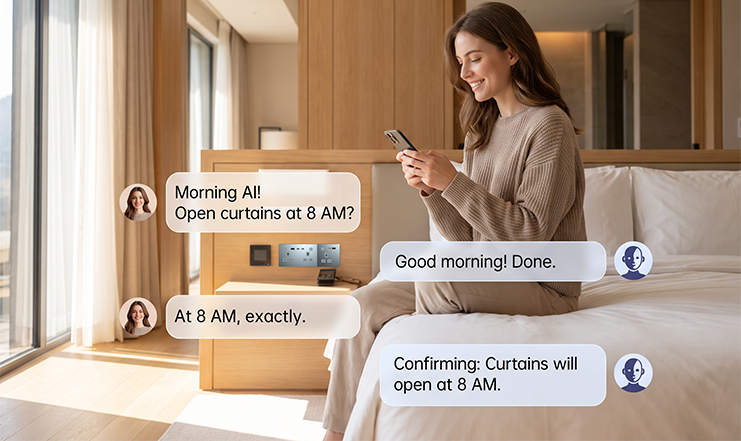
Multiple in-room smart devices are interconnected. With Google Assistant, users can control lighting, curtains, TVs, air conditioning, coffee makers and other appliances using natural-language commands. Its built-in multilingual voice recognition supports Chinese and English to accommodate international guests.
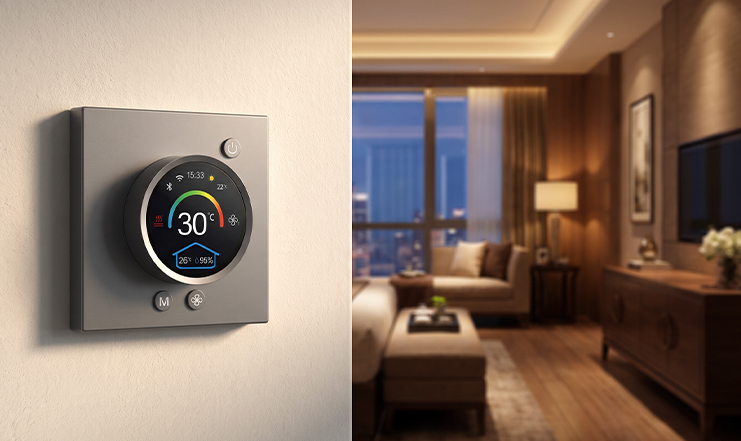
Smart Temperature Control and Occupancy Coordination
Temperature control relies on the coordination of smart thermostats and occupancy sensors. The system automatically adjusts air-conditioning settings according to indoor temperature, humidity and real-time room occupancy, ensuring guest comfort while optimizing energy efficiency.
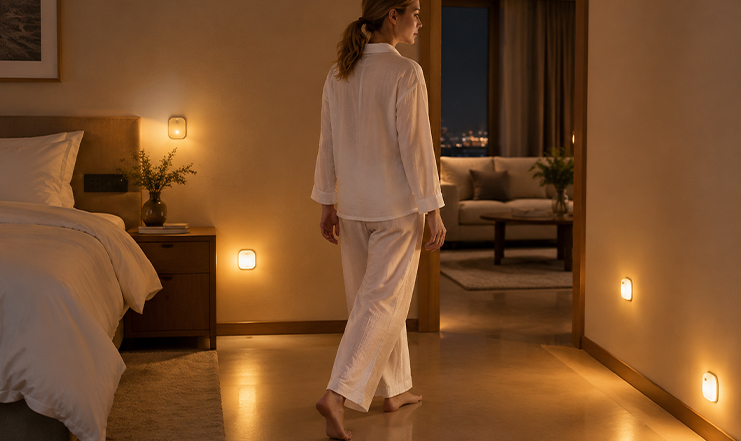
Lighting, Safety, and Audio Interaction
The system adopts motion sensors, low-brightness night lights, and door/window contact sensors to support automated lighting control, nighttime safety guidance, and hazard alerts. For instance, it turns on soft pathway lighting automatically at night and triggers instant alerts when water leakage is detected. The smart audio system enables wireless audio streaming from mobile devices to in-room speakers, enriching entertainment experience and spatial interaction.
Data Synchronization and Platform Integration
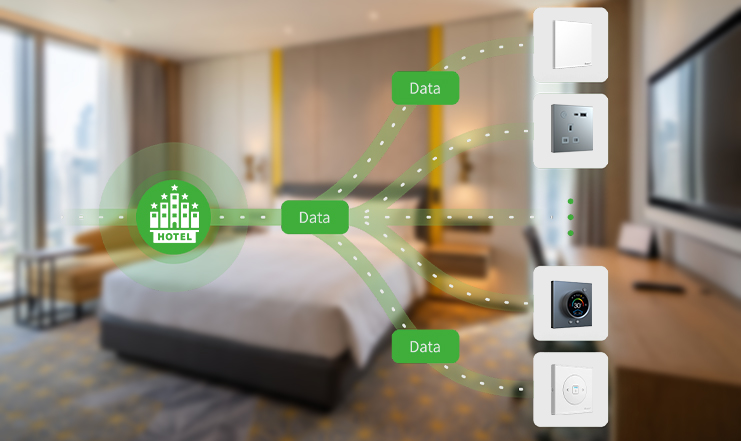
All in-room control devices are integrated into the hotel network and support bidirectional status synchronization with backend systems, laying the data foundation for visualized management and status monitoring. Device status, environmental parameters and energy data generated at the room layer are aggregated to the platform layer for centralized monitoring, analysis and reporting.
Platform Architecture and System Integration
The backend centralized management platform adopts a centralized architecture to link in-room devices with hotel management systems such as PMS. It aggregates guest interaction records, device status, service requests, energy data and access control information on cloud or on-premises servers. Standardized interfaces support synchronized data exchange and permission management, enabling unified monitoring, automated responses and operational analytics.
Remote Supervision and Operational Analytics
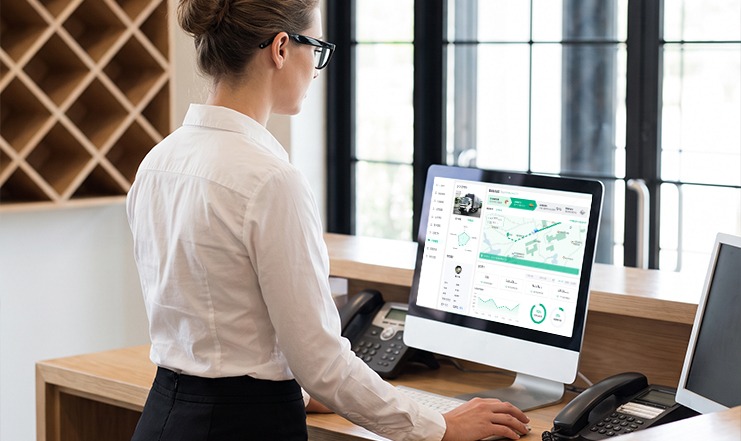
The platform enables operators to remotely supervise devices and services, including monitoring, scheduling and configuration of automated tasks. Built-in analytics cover energy usage, occupancy efficiency and guest behavior, laying the data foundation for operational optimization. These insights are displayed centrally at the platform layer and can be exported as charts and reports to support energy management, staff scheduling and service evaluation.

Check-in and Access Control Integration
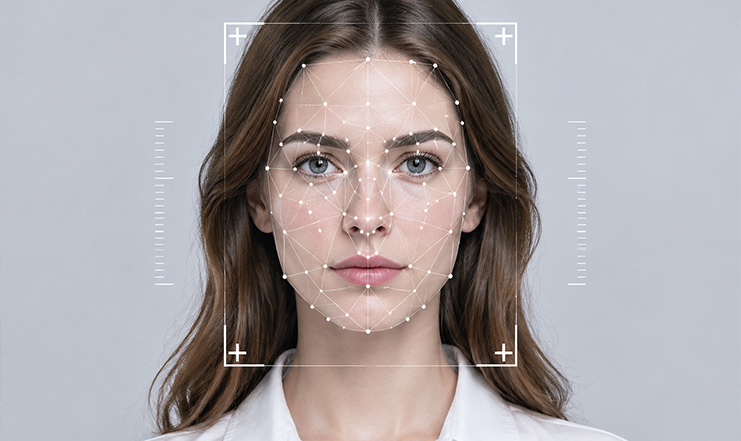
The platform integrates door controllers into the room management architecture and synchronizes with the PMS to automate permission assignment, status updates, and event logging. It supports protocols including VingCard (ASSA ABLOY) and grants time-limited or permanent access based on occupancy status, user identity, and schedules. The platform can also interface with self-check-in kiosks, allowing guests to complete identity verification via ID or passport scanning, facial recognition, or QR codes. The system automatically cross-references bookings with room status and activates access upon confirmation, shortening check-in times, lowering front-desk workload, and elevating the guest experience.
Platform Layer Responsibilities
The platform layer centrally manages device access, permission synchronization, data analytics, and report output. The room layer handles sensing and actuation, whereas the platform layer takes charge of centralized management and data orchestration. This separation eliminates redundant function development and reserves standardized interfaces for future integration with building systems.
Conclusion
The Smart Hotel Room Automation and Centralized Management Platform leverages in-room devices for sensing and interaction, with a backend platform providing unified access control, permission synchronization and operational analytics. The two layers feature well-defined responsibilities and interconnected data flows, eliminating redundant development while elevating guest experience, operational efficiency and digital management capabilities.