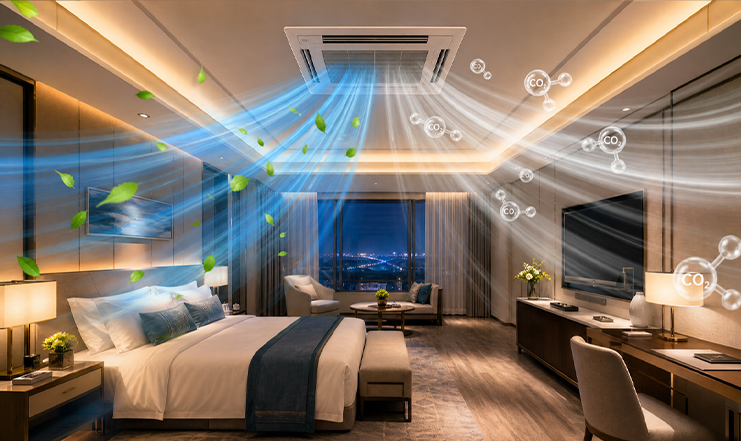
Smart Hotel Product Technology Overview
YOSWIT Smart Hotel Solution is built on three core goals: intelligent control, energy optimization, and process integration. It integrates in-room automation, a centralized management platform, and smart building systems through a unified IoT platform with integrated hardware-software control. The system enables intelligent response to guest behavior, centralized device monitoring, and dynamic energy management, which enhances both guest experience and operational efficiency, while also supporting digital transformation and sustainable development in modern hotels.
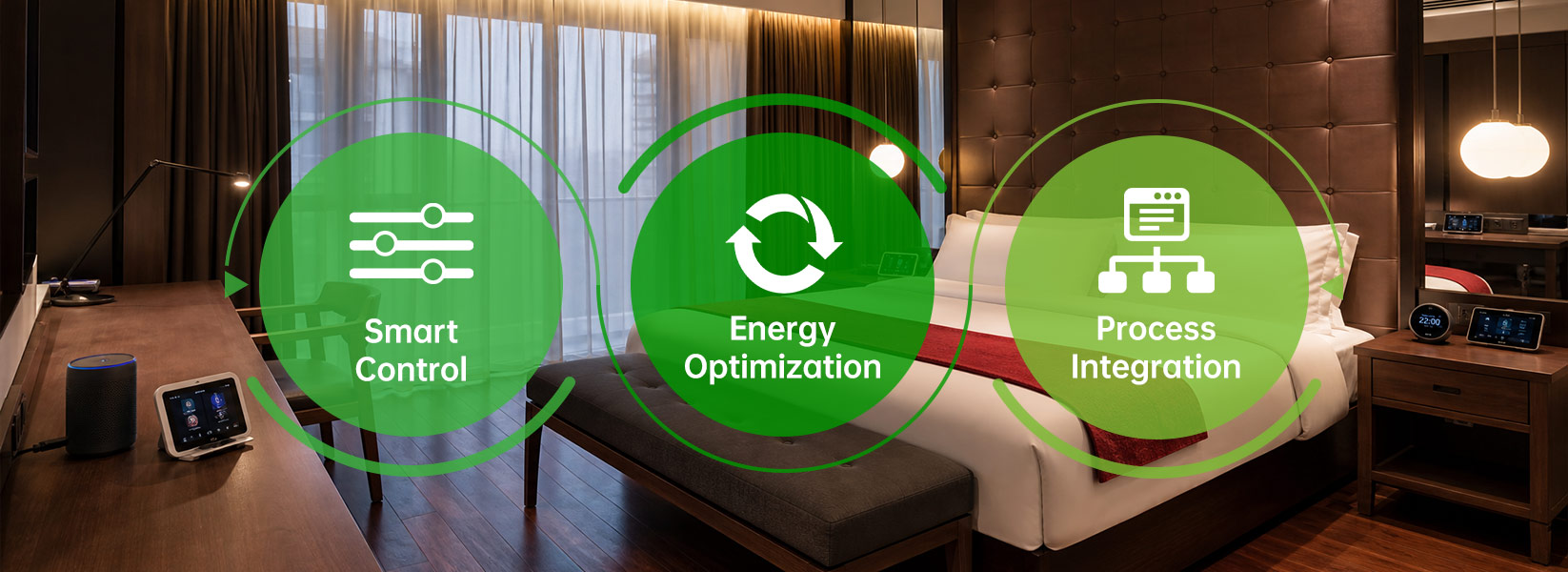
System Overview and Modular Architecture
The YOSWIT Room Automation System transforms traditional hotel rooms into intelligent spaces capable of sensing, responding, and being remotely controlled through integrated sensing, actuation, and interactive technologies. Built on wireless communication and a modular architecture, the system eliminates the need for traditional wiring and is suitable for both new construction and renovation projects.
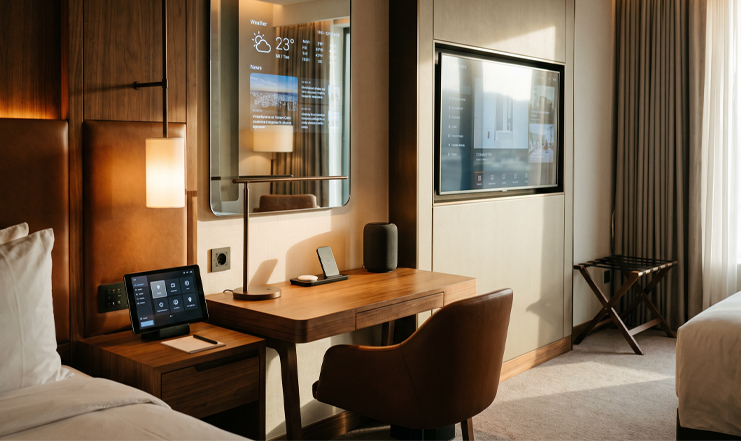
Voice Interaction and Smart Device Control
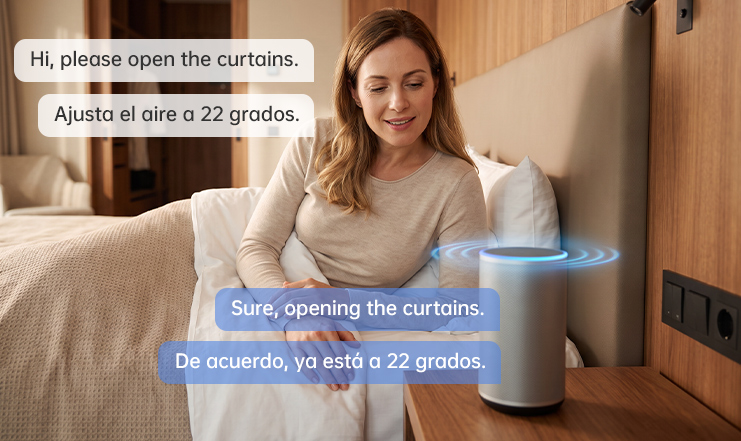
At the heart of the system is a sophisticated interconnected operation among a series of smart devices. Through Google Assistant, users can intuitively manage lighting, curtains, television, air conditioning, coffee makers, and other appliances via natural language instructions. The built-in multilingual voice recognition supports both Chinese and English, catering to the usage preferences of international guests.
Climate, Lighting, Safety, and Audio Automation
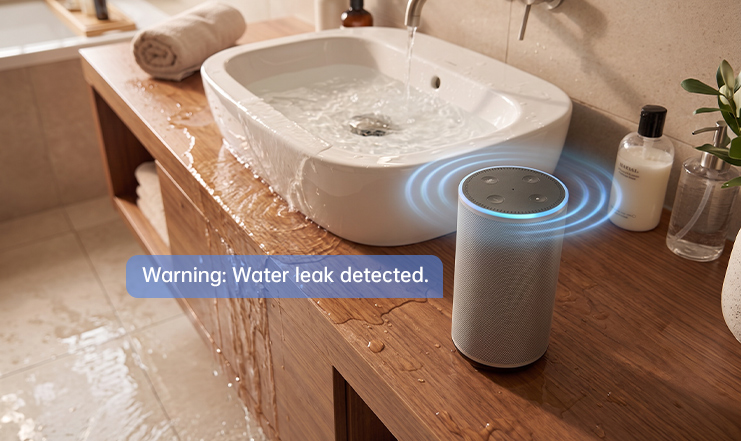
The temperature control function is achieved through coordinated interaction among smart thermostats and occupancy sensors. The system automatically adjusts air conditioning settings based on multiple conditions such as indoor temperature, humidity levels, and real-time room occupancy, ensuring both energy efficiency and guest comfort. The system also uses motion sensors, low-level night lights, and door/window contact sensors to enable automated lighting control, safe passage assistance, and hazard alerts. For instance, it automatically activates gentle pathway lighting during nighttime hours and immediately issues warnings upon detecting water leaks. The smart audio system also allows users to wirelessly stream audio from their mobile devices to the room’s speakers, enhancing both entertainment and spatial interactivity.
Platform Integration and Backend Synchronization
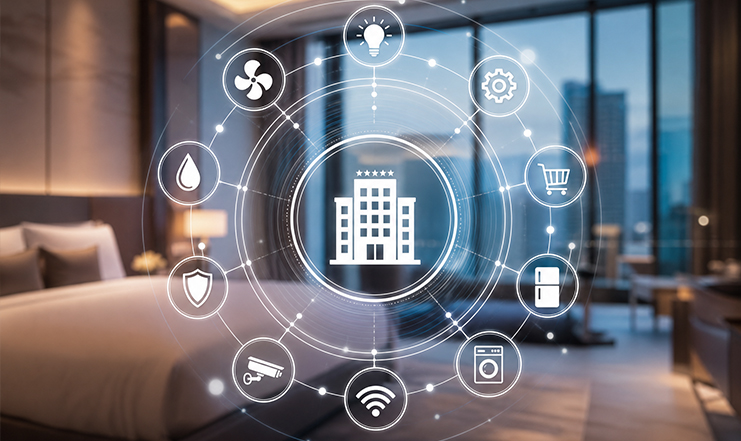
All room control devices are integrated into the hotel network through a unified platform and maintain bidirectional status synchronization with backend systems, enabling visualized management, status monitoring, and data analysis.
Centralized Management Platform and Data-Driven Operations
The YOSWIT Backend Centralized Management Platform connects in-room devices with hotel systems such as PMS. Based on a centralized architecture, it integrates guest interactions, device status, service requests, energy data, and access controls into cloud or local servers, enabling unified monitoring, automated responses, and operational analytics.
System Integration: Standardized interfaces connect PMS and BMS, enabling synchronized data flow and permissions.
Remote Operations: Staff can monitor devices and services across properties, with tools for scheduling and automated task configuration.
Data Analytics: Built-in analytics cover energy usage, occupancy efficiency, and guest behavior; visual charts and exportable reports support energy management, staff scheduling, and service evaluation.

Smart Access Control and Self-Service Check-In
The system integrates access control with check-in processes, incorporating door controllers into the room management architecture and synchronizing with PMS to automate permission assignment, status updates, and logging. It supports protocols such as Vingcard (ASSA ABLOY) and grants time-based or permanent access based on occupancy, user identity, and schedules, ensuring security, compliance, and flexibility.
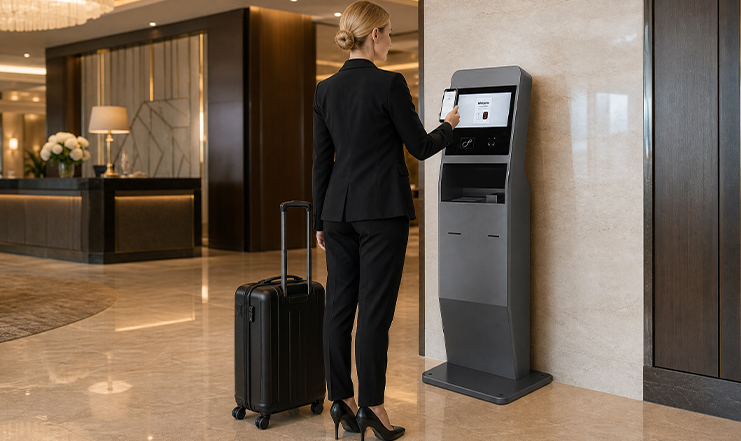
The system integrates with self check-in kiosks, allowing guests to verify their identity and issue room keys using ID or passport scanning, facial recognition, or QR codes. It auto-matches bookings with room status and instantly activates access upon confirmation, speeding up arrival, reducing front desk tasks, and enhancing the guest experience.
Smart Building BMS and Energy-Efficient Environment Control
The YOSWIT Smart Building System integrates a BMS platform with energy-saving devices to intelligently manage a building’s environment, energy usage, and supporting facilities. Using sensors to monitor operational status, environmental conditions, and energy consumption, it employs predefined logic and strategy engines to coordinate equipment such as HVAC, lighting, blinds, and fresh air systems.
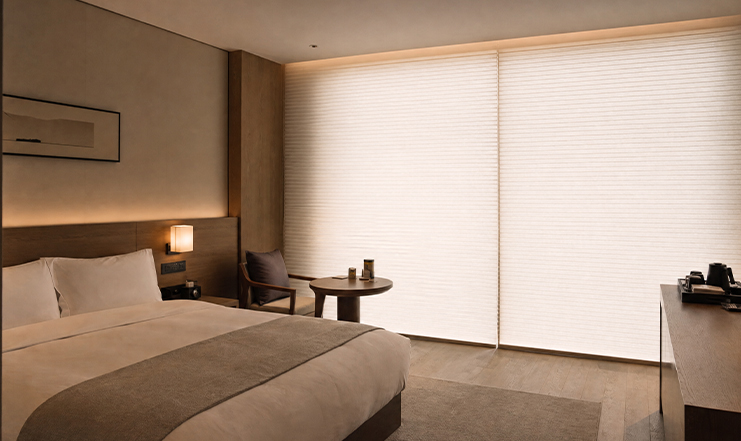
As the control core, the BMS automatically adjusts lighting, HVAC, and blinds based on predefined scenarios, such as reducing energy use during unoccupied periods or closing blinds in strong sunlight to decrease cooling load and overall energy consumption.
The energy-saving fan coil units reduce energy use by about 30% versus conventional systems under comparable conditions (subject to project baseline/verified data) and suit guest rooms, corridors, and meeting spaces. The smart ventilation system helps reduce/inactivate airborne viruses and bacteria and remove odors, improving indoor air quality and guest safety; performance and filter maintenance should be verified against applicable standards.
To support ESG goals, smart recycling bins, reverse vending machines, and automated laundry facilities are integrated through a unified monitoring platform to improve recycling efficiency and automation, with results tracked by indicators such as recycling rate, waste reduction, energy/water savings, and carbon reduction. Installation, compliance, data security, and lifecycle cost/ROI should be assessed during implementation.